You’ve probably noticed that one side of your driveway stays wet longer than the other after a rainy morning. But have you ever looked up and noticed the same thing happening on your roof?
One slope looks relatively clean. The other has green moss creeping along the shingles, particularly near the trees.
Same house. Same roof. Same Edmonds rain. So why such a noticeable difference?
The answer usually involves sunlight, moisture, and the conditions surrounding each roof section. Understanding these differences can help you decide whether you need routine maintenance, an inspection, or professional roof cleaning in Edmonds.
And before you assume the greener side has serious damage, there’s something important to understand about how moss grows.
Your Roof Has Two Different Microclimates. Here’s Why.
Your roof might be one structure, but its slopes don’t experience identical conditions. After a rainy afternoon in Edmonds, sunlight may reach one side while the opposite slope remains shaded for hours. That difference affects how quickly the roofing surface dries.
The Side That Gets Less Sunlight
In Edmonds, the direction a roof faces can influence how much sunshine reaches its shingles throughout the day. North-facing sections often receive less direct sun than south-facing ones. After rainfall or overnight condensation, moisture may linger on these less-exposed shingles even when brighter sections have already dried. Moss favors moisture, making these shaded areas suitable places for growth.
The Asphalt Roofing Manufacturers Association explains that north-facing roof sections commonly experience greater moss growth because they receive less sunlight and retain moisture longer. However, roof orientation alone doesn’t determine where moss appears. A south-facing slope beneath dense trees may develop more moss than an exposed north-facing section.
The Side That Dries Faster
Now picture the opposite slope.
Sunlight reaches its shingles more directly, helping the surface dry sooner. Those shorter periods of dampness can make conditions less favorable for moss. That’s why two roof sections installed on the same day can develop very different appearances over time.
That Beautiful Tree Outside Your Window Has Another Side to Its Story
Maybe there’s a tall evergreen beside your Edmonds home that you particularly love.
It provides privacy, shades your backyard during summer, and gives your property character.
But while you enjoy the shade beneath its branches, your roof experiences that shade differently.
Nearby trees can limit sunlight and drop needles, leaves, and twigs onto roofing surfaces.
That debris can collect moisture, especially around roof valleys and areas beneath overhanging branches.
Some Edmonds properties have mature tree coverage close to their rooflines. Where those trees create persistent shade, shingles may remain damp longer than exposed sections.
You might notice moss appearing directly beneath branches while the rest of the roof remains relatively clear.
That doesn’t mean you need to remove the tree.
Selective pruning by a qualified arborist may improve sunlight exposure and reduce debris accumulation without sacrificing a valued part of your landscape.
However, when moss has already spread across shaded shingles, roof cleaning in Edmonds may help address the existing buildup while you take steps to reduce the conditions that encourage its return.
Oregon State University Extension identifies reducing excessive shade as an important long-term approach to managing recurring roof moss.
Your Roof’s Moss Pattern May Tell You Something
Not all moss growth looks the same.
The location of the green patches can offer useful clues about the conditions affecting your roof.
Moss Concentrated Beneath Tree Branches
When green patches appear directly beneath branches, check whether the tree canopy blocks daylight or regularly drops needles and leaves onto that area.
Look for nearby branches that limit sunlight or drop needles onto the roof.
Moss Gathering Around Roof Valleys
Roof valleys channel runoff from adjoining slopes. They can also collect leaves and organic debris, creating areas that stay damp longer.
Persistent buildup deserves attention because it may interfere with normal drainage.
Moss Spreading Across One Entire Slope
When one slope develops widespread growth while another remains relatively clean, differences in sunlight exposure and surface drying may explain the contrast.
These patterns don’t provide a complete roof diagnosis.
However, they can help you describe what you’ve noticed when arranging an inspection.
Is the Greener Side of Your Roof Actually in Trouble?
Seeing moss spread across your shingles can make you wonder whether the roof underneath has already deteriorated.
Fortunately, visible moss doesn’t automatically mean your roof leaks or needs replacement.
The amount of growth and the condition of the roofing materials matter.
When Moss Is Primarily a Maintenance Concern
Small, isolated patches without visible roofing defects may indicate an early maintenance issue.
Addressing them appropriately can help limit further buildup.
An inspection can determine whether cleaning, debris removal, or continued monitoring makes sense.
When Moss Deserves Closer Attention
Dense moss growth can hold moisture and debris near roofing surfaces.
On asphalt shingles, established growth can also contribute to lifting or curling at vulnerable shingle edges. Severe buildup may interfere with water movement and increase the risk of moisture-related problems.
Warning signs include visibly raised shingles, damaged roofing materials, heavy debris accumulation, or interior water stains.
Still, moss alone doesn’t prove that a roof has structural damage.
A qualified roofing professional can assess whether the affected area needs cleaning, repairs, or additional investigation.
Should You Clean Only the Mossy Side or Inspect the Entire Roof?
Suppose the shaded side of your roof has noticeable moss while the sunny side looks almost untouched.
Should you clean both?
Not necessarily.
The heavily affected slope may need treatment while another section requires only routine maintenance.
However, inspecting the entire roof makes sense before deciding on the work.
A cleaner-looking slope could still have damaged flashing, early moss growth, or debris hidden in a valley.
An inspection should consider the roofing material, moss coverage, shingle condition, and drainage paths.
The goal isn’t to perform identical cleaning on every section.
It’s to address the conditions that actually need attention.
What Should Professional Roof Cleaning in Edmonds Actually Involve?
When moss becomes widespread, homeowners often focus on removing the green growth as quickly as possible.
But protecting the roofing material matters more than achieving an instantly spotless appearance.
A suitable cleaning approach starts with identifying the roof type and evaluating its condition.
Choose Methods That Match Your Roofing Material
Asphalt shingles, metal roofing, and wood roofing can have different maintenance requirements.
A professional should follow the roofing manufacturer’s guidance when selecting cleaning products and procedures.
Avoid assuming that a method suitable for one material will work safely on another.
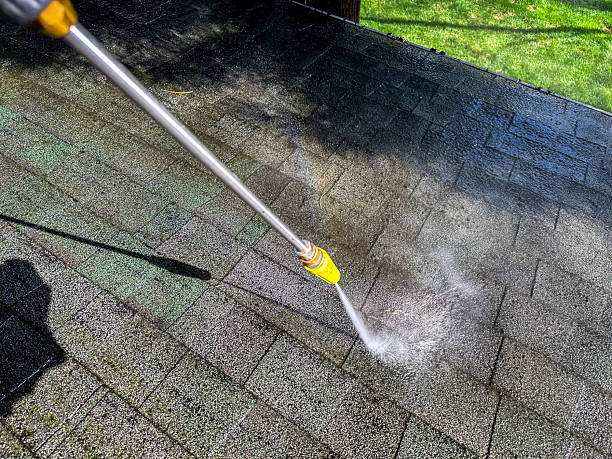
Avoid Pressure Washing Asphalt Shingles
A powerful water jet can strip away some of the mineral granules that protect asphalt shingles, potentially shortening their useful life.
The Asphalt Roofing Manufacturers Association specifically advises against using pressure washers on asphalt shingle roofs.
Appropriate moss treatment may involve manufacturer-compatible products and gentle cleaning procedures.
Homeowners should also avoid climbing onto wet or moss-covered roofs. Slippery surfaces and working at height create serious fall hazards.
Protect Landscaping and Check for Damage
Roof cleaning can affect nearby plants, gutters, and surrounding surfaces.
Professionals should follow product labels, protect landscaping, and manage runoff appropriately.
They should also identify damaged shingles or flashing that need repair rather than cleaning alone.
For roof moss removal in Edmonds, the goal should go beyond clearing visible growth. The cleaning approach should also preserve the shingles and avoid unnecessary surface damage.
What Can You Change So Moss Doesn’t Keep Returning?
Imagine arranging roof cleaning this fall, only to notice new green patches appearing after another wet season.
That can happen when the same shaded, damp conditions remain.
Fortunately, consistent maintenance can help manage recurring growth.
- Reduce excessive shade where practical. Ask a qualified arborist about selective pruning near heavily shaded roof sections.
- Manage roof debris. Arrange safe removal of accumulated leaves, needles, and twigs.
- Maintain gutters and downspouts. Clear drainage systems help direct runoff away from the roof and building.
- Inspect your roof periodically. Look for early moss growth, damaged shingles, and areas where debris collects.
- Use compatible preventive treatments when appropriate. Follow manufacturer instructions and understand that treatments may require future maintenance.
Oregon State University Extension notes that moss can return when favorable growing conditions persist, even after removal.
No maintenance approach guarantees a permanently moss-free roof.
However, regular roof maintenance in Edmonds can help homeowners identify problems early and manage the conditions that encourage repeated growth.
Questions Edmonds Homeowners Ask About Uneven Roof Moss
Does Moss Always Grow on the North Side of a Roof?
No. North-facing slopes often stay wetter because they receive less direct sunshine. Even a roof slope that receives afternoon sun can develop moss where trees shade portions of it and moisture persists.
Can Moss Grow Back After Professional Roof Cleaning?
Yes. Moss can return when dampness, shade, and debris accumulation continue. Periodic inspections and appropriate preventive maintenance can help manage recurring growth.
Can I Remove Roof Moss with a Pressure Washer?
No, you should not pressure wash asphalt shingles. High-pressure water can damage the roofing surface and remove protective granules. Ask a qualified professional about manufacturer-compatible cleaning methods.
Your Roof Isn’t Unevenly Cared For. It Faces Uneven Conditions
The next time you notice one green roof slope beside another that looks relatively clean, remember that both sections experience different environmental conditions.
One receives more sunlight. Another sits beneath overhanging branches. One dries quickly, while another remains damp.
Those differences can explain why moss develops unevenly across Edmonds roofs.
Rather than assuming the worst, observe your roof safely from the ground and pay attention to changing moss patterns.
If growth becomes extensive or you notice roofing damage, arrange a professional assessment.
Understanding what your roof is telling you can help you make better maintenance decisions before small concerns become larger ones