A new fence is one of the larger outdoor projects most homeowners take on, and the quotes for it can vary more than people expect. Three contractors can look at the same yard and come back with prices that are thousands apart. The cheapest number isn’t always the best deal, and the most expensive isn’t always the best fence. The real value lies in the details behind each figure: materials, footing depth, gate hardware, site preparation, and what happens if something goes wrong after the crew leaves. Knowing how to read and compare those details is the best protection against a fence that disappoints.
Get Clear on the Project Before You Call Anyone
Contractors can only quote what you describe, so a little preparation leads to more accurate and comparable estimates. Before scheduling visits, decide on:
- Purpose. Privacy, security, keeping a dog in, enclosing a pool, or simply defining the property line. Each purpose points toward different heights and styles.
- Approximate length. Pace off the fence line or measure it on a property map. Even a rough figure helps you sanity-check quotes.
- Material preference. Wood, vinyl, aluminum, chain link, or composite, or at least a shortlist.
- Gates. Number, width, and whether any must fit a vehicle, mower, or trailer.
- Known obstacles. Slopes, trees, rock, retaining walls, sprinkler lines, or an old fence that needs removing.
Giving every contractor the same brief makes it far easier to compare their quotes fairly.
What a Thorough Quote Should Include
A one-line price is a warning sign. A professional estimate breaks the job into parts so you can see exactly what you’re paying for. Look for:
- Total linear footage and the height of each section
- Material specifications, such as wood species and grade, board thickness, vinyl wall thickness, or the gauge of chain link
- Post details, including material, size, spacing, depth, and how posts are set (concrete, gravel, or a combination)
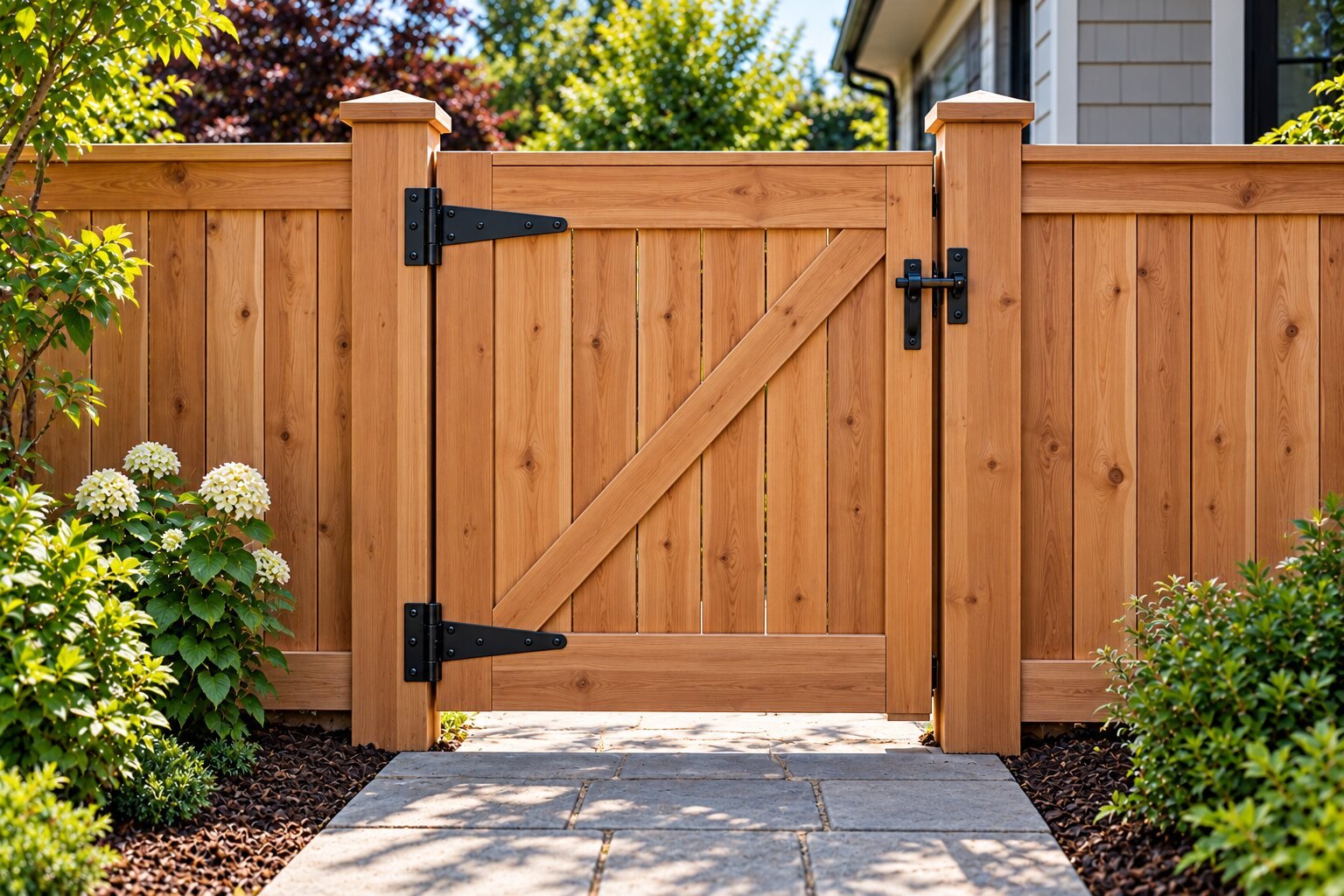
- Gate specifications, covering size, frame construction, hinges, latches, and any anti-sag hardware
- Removal and disposal of an existing fence, if needed
- Site work, such as clearing brush, handling slopes, or working around tree roots
- Finishing, such as stain or sealer, and whether it’s applied at installation or later
- Permits and utility locates, and who is responsible for each
- Timeline, payment schedule, and the deposit amount
- Warranty terms for both materials and labor
If two quotes differ widely in price, comparing these line items usually explains why.
Where Low Quotes Usually Cut Corners
A lower price can reflect genuine efficiency, but it often hides compromises that only show up years later:
- Shallower posts or wider post spacing, which saves labor and materials but weakens the fence against wind
- Lower-grade lumber with more sapwood, loose knots, or thinner boards that warp sooner
- Standard steel fasteners instead of galvanized or stainless, leading to rust streaks and loose boards
- Lightweight gate frames that sag within a season or two
- No haul-away, leaving you to dispose of the old fence yourself
- Missing permits, which can cause trouble with inspections or when selling the home
Ask each contractor directly how they handle these points. A confident, specific answer is a good sign.
Questions Worth Asking at the Site Visit
The estimate visit is also an interview. Useful questions include:
- How long have you been installing fences in this area, and can I see recent local work?
- Are you licensed, bonded, and insured, and can you provide proof?
- Who will be on site, your own crew or subcontractors?
- How do you handle slopes on this lot, stepping the panels or racking them to follow the grade?
- What happens if the crew hits rock, roots, or an unmarked line while digging?
- What does your warranty cover, and for how long?
- How do you protect lawns, garden beds, and irrigation during installation?
Pay attention to whether the contractor asks you questions too. Someone who asks about pets, HOA rules, gate use, and neighbors is thinking about how the fence will actually work for you.
Local Knowledge Matters More Than It Seems
Fence rules, soil conditions, and neighborhood expectations vary from one city to the next, even within the same metro area. Suburbs with many homeowner associations often have design guidelines covering height, style, color, and which side of the fence faces out. Hillside lots need careful post layout and drainage planning. Wet climates demand rot-resistant materials and well-drained footings.
That’s why homeowners in places like the Seattle Eastside often look for a fence company Bellevue residents already know rather than a crew from across the region. A local contractor usually understands the permit process, common HOA requirements, and the sloped, tree-filled lots that are typical of the area. The same principle applies anywhere: a contractor who works in your city every week is less likely to be surprised by its rules or its soil.
Red Flags to Watch For
Walk away, or at least slow down, if a contractor:
- Asks for full payment before any work begins
- Can’t provide proof of insurance or a valid license
- Gives only a verbal quote and won’t put details in writing
- Pressures you with a “today only” price
- Dismisses permits or property-line questions as unnecessary
- Has no verifiable local reviews or references
A reasonable deposit to order materials is normal. Paying everything upfront to an unknown contractor is not.
Protecting Yourself Before Work Starts
Once you’ve chosen a contractor, a few final steps prevent misunderstandings:
- Confirm the property line. If the boundary is uncertain, a survey is cheaper than moving a finished fence.
- Talk to neighbors. Let them know about the schedule, and discuss shared-fence costs if the fence sits on the boundary.
- Get HOA approval in writing, if your neighborhood requires it.
- Mark sprinkler heads and private lines that a utility locate won’t cover.
- Sign a written contract that matches the quote, including materials, timeline, and payment terms.
Choosing Value Over Price
The right fence contractor isn’t necessarily the cheapest or the most expensive. It’s the one whose quote is clear, whose materials and methods suit your climate and lot, and who stands behind the work with a real warranty. Taking the time to compare quotes line by line, ask the right questions, and check local experience turns a big purchase into a fence that does its job and looks good for many years.