A common disappointment for new gardeners is planting a beautiful flower bed that blooms gorgeously for a few weeks and then sits green and flowerless for the rest of the season. The fix isn’t more plants — it’s planning around bloom timing from the start, rather than buying whatever looks pretty at the garden center on a single spring trip.
Understand Bloom Succession Before You Buy Anything
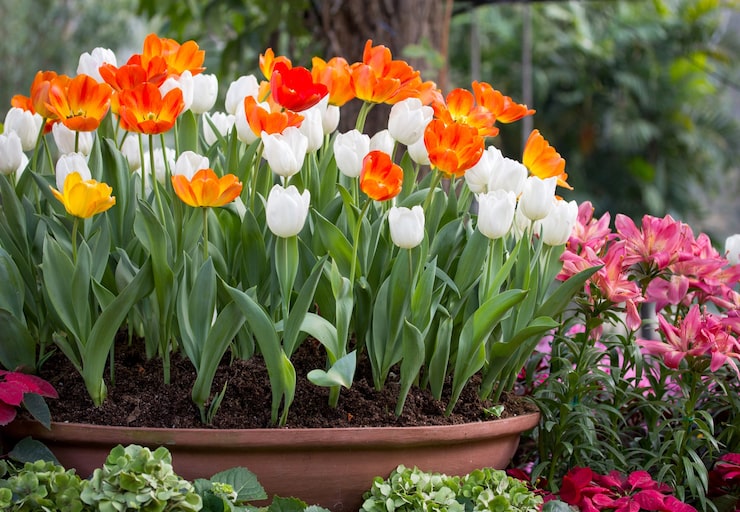
The core principle behind a season-long flower garden is succession planting — choosing varieties with staggered, overlapping bloom periods so that as one plant’s flowers fade, another is just coming into its peak. Spring bulbs (tulips, daffodils), early-summer perennials (peonies, irises), mid-summer bloomers (coneflowers, daylilies), and late-season varieties (asters, sedum) together create continuous color rather than one dramatic but brief peak.
Mix Annuals and Perennials Strategically
Perennials return year after year but often have a shorter, more defined bloom window, while annuals bloom continuously from planting until frost but need to be replanted every year. A flower garden built entirely on perennials alone often has frustrating gaps between bloom periods, while filling those specific gaps with annuals — planted in the spaces perennials leave temporarily bare — keeps color present throughout the season without requiring you to replant the entire bed annually.
Plan for Your Actual Light Conditions, Not Aspirational Ones
Before selecting plants, observe your garden bed honestly across a full day — most classic flower garden plants (roses, peonies, zinnias, dahlias) need 6 or more hours of direct sun to bloom well, and planting sun-loving varieties in a partially shaded bed produces disappointing, sparse blooms regardless of soil quality or care. For shadier areas, hostas, astilbe, and certain hydrangea varieties provide genuine color and texture without fighting your actual light conditions.
Height and Layering Create Visual Depth
A flower bed planted at uniform height looks flat regardless of color variety. Planning in layers — taller plants toward the back or center of a bed, medium height in the middle ground, and low, spreading plants toward the front edge — creates the kind of visual depth seen in professionally designed gardens, and it’s a planning step that costs nothing extra beyond thinking through plant placement before digging.
Deadheading Extends Bloom Time Significantly
Regularly removing spent flowers (deadheading) on many annual and some perennial varieties signals the plant to continue producing new blooms rather than diverting energy into seed production. This is a five-minute weekly task that meaningfully extends the active blooming period of many garden plants well beyond their natural unattended bloom window.
Soil Prep Matters More Than Most Beginners Realize
Amending garden soil with compost before planting, rather than after problems appear, gives flowering plants the nutrient foundation they need to bloom vigorously rather than just survive. A flower garden planted directly into poor, unamended soil often struggles regardless of how well-chosen the plant varieties are.
Starting Realistically
A genuinely beautiful, season-long flower garden takes a full growing season or two to really come into its own, as perennials establish their root systems and you learn how your specific space and light conditions actually behave. Starting with a smaller, well-planned bed and expanding gradually produces better long-term results than an ambitious first-year planting that becomes overwhelming to maintain.