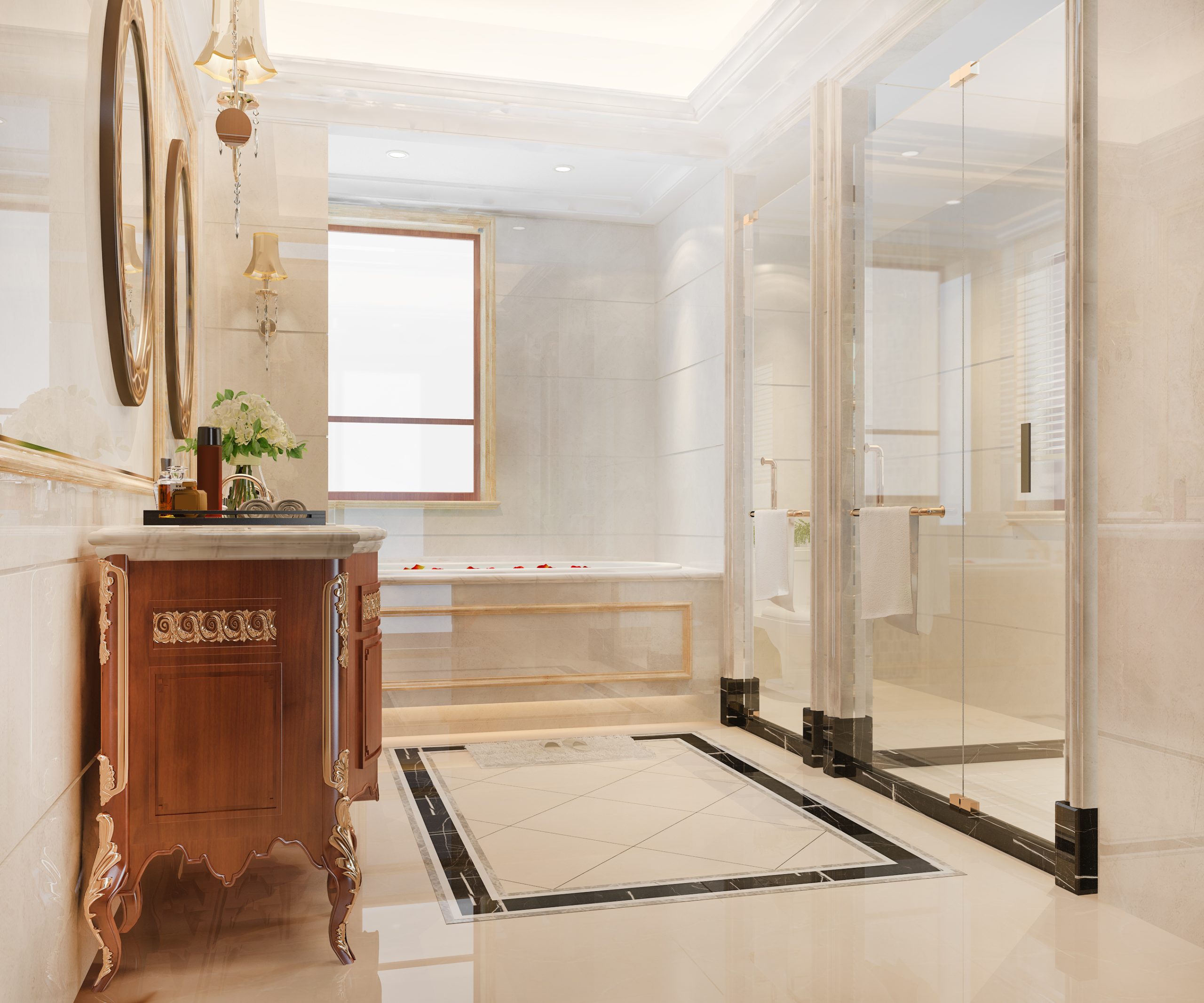
Bathroom floor tile gets chosen for its looks more often than for how it’ll actually perform, and that’s understandable — tile samples are visual by nature. But a bathroom floor faces water, temperature swings, bare feet, and frequent cleaning in a way most other flooring in your home doesn’t. Here’s how to choose tile that looks good and survives daily reality.
Porcelain Over Ceramic for Floors Specifically
While both porcelain and ceramic tile work for bathroom walls, porcelain is the stronger choice for floors specifically because it’s denser, less porous, and more resistant to water absorption and cracking under foot traffic over time. Porcelain costs somewhat more than ceramic, but for a surface that takes daily wear, the durability difference justifies the modest price gap.
Slip Resistance Matters More Than Aesthetics
A wet bathroom floor with a high-gloss, polished tile finish looks beautiful in photos and becomes a genuine slip hazard in daily use. Look specifically for tile rated with a higher coefficient of friction (often marketed as “matte,” “textured,” or with a specific slip-resistance rating) for bathroom floors, reserving glossier finishes for walls or for bathrooms where slip risk matters less, like a rarely-used powder room.
Large-Format Tile Creates a Cleaner Look (With a Tradeoff)
Large-format tiles — 12×24 inches or larger — have become a popular choice because fewer grout lines mean a cleaner, more expansive look and genuinely less grout to clean over time. The tradeoff is that larger tiles require a very flat, properly prepared subfloor to install correctly; uneven installation becomes more visually obvious with larger format pieces than with smaller ones that naturally hide minor subfloor imperfections.
Patterned Tile as a Focal Point
Encaustic-look and patterned tile, often in black-and-white or Mediterranean-inspired designs, has become a genuinely popular way to make a bathroom floor a design feature rather than a background element. This works particularly well in powder rooms and guest bathrooms where you want a memorable visual moment, while primary bathrooms used daily often benefit from a slightly calmer floor that won’t visually compete with everything else in the space over years of daily use.
Heated Floor Compatibility Is Worth Checking
If a heated floor system is part of your renovation plans, confirm your chosen tile is rated compatible with radiant heating before purchase — most porcelain and ceramic tile handles this well, but natural stone varieties can react differently to consistent heat exposure, and it’s worth confirming with the specific product rather than assuming.
Grout Color Is a Genuinely Underrated Decision
White or light grout looks pristine on day one and shows dirt and discoloration noticeably faster than a mid-tone gray grout, which hides daily grime considerably better while still looking intentional rather than like a maintenance compromise. This is a small decision that meaningfully affects how “clean” your bathroom floor looks between deep cleanings.
The Practical Bottom Line
The best bathroom floor tile balances three things: genuine water resistance, adequate slip resistance for a wet environment, and a look you’ll still want to see in five years. Choosing based on photos alone, without checking these practical factors, is the most common source of bathroom floor regret.