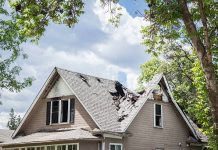
A missing shingle, loose piece of siding or small gap around exterior trim may not seem like an urgent home repair.
The problem is that water does not need a large opening to cause damage.
Once rain gets behind roofing, siding or flashing, it can travel through areas homeowners cannot easily see. Moisture may reach roof decking, wall sheathing, insulation, fascia boards, window trim and structural framing long before obvious damage appears inside the house.
What starts as a relatively minor exterior defect can eventually result in wood rot, staining, damaged insulation and larger repair projects.
Understanding how a home’s exterior works as one connected system can help homeowners identify problems earlier and prevent avoidable water damage.
Your Home’s Exterior Is a Water-Management System
Roofing and siding are often thought of as separate parts of a home.
In reality, they work together with:
- Flashing
- Gutters
- Fascia
- Soffits
- Windows
- Doors
- Chimneys
- Exterior trim
- Masonry
- Caulking
All these components help control water.
A roof directs rainfall toward gutters.
Flashing protects vulnerable transitions.
Siding protects exterior walls.
Trim and sealants protect openings.
Gutters move roof runoff away from the structure.
When one component fails, water can sometimes reach another part of the building.
This explains why repairing only the visible stain is not always enough.
1. Missing or Damaged Shingles
Shingles form one of the first layers of protection against rain.
They can become damaged by:
- High winds
- Falling branches
- Age
- Ice
- Storms
- Installation problems
- Foot traffic
A missing shingle creates an area where the materials underneath receive greater exposure.
Water may then reach the underlayment or roof decking.
One damaged shingle does not necessarily mean an entire roof needs replacement.
Localized roofing repair may be possible when the surrounding materials remain in good condition.
The important thing is addressing the opening before repeated storms allow more moisture into the roof system.
2. Small Roof Leaks Can Travel
One reason roof leaks can be difficult to diagnose is that the interior stain may not appear directly underneath the exterior defect.
Water can travel along:
- Rafters
- Roof decking
- Pipes
- Insulation
- Framing
- Fasteners
before finally becoming visible.
For example, water may enter near a roof-to-wall connection and appear several feet away on an interior ceiling.
This means repairing only the area directly above the stain may fail to solve the problem.
A roof leak inspection should consider how water could be traveling through the building.
Homeowners experiencing these problems can explore professional roofing and siding repair services that evaluate roofing, siding, flashing, trim and related exterior water-entry points together.
3. Flashing Is One of the Most Important Details
Flashing is installed where exterior building components meet.
These transitions are particularly vulnerable to water.
Flashing may be found around:
- Chimneys
- Windows
- Doors
- Roof-to-wall joints
- Dormers
- Roof edges
- Porches
- Deck connections
- Masonry walls
Instead of simply sealing an opening, properly installed flashing is intended to direct water outward.
Problems develop when flashing becomes:
- Loose
- Corroded
- Cracked
- Improperly overlapped
- Separated
- Missing
Water can then move behind exterior materials.
Because flashing is often partly hidden, defects may not be immediately obvious from the ground.
4. Chimney Flashing Can Cause Roof Leaks
The point where a chimney passes through the roof is particularly vulnerable.
This area combines:
- Masonry
- Roofing
- Flashing
- Mortar joints
- Roof slope
Water near a chimney may enter through damaged flashing, but it may also come from deteriorated chimney masonry.
Potential sources include:
- Cracked chimney crowns
- Missing mortar
- Spalling bricks
- Damaged flashing
- Failed sealant
- Missing chimney caps
- Damaged shingles
A contractor investigating a chimney-area leak should therefore consider both the roofing and masonry.
Simply applying another layer of sealant may not solve the underlying defect.
5. Loose Siding Can Allow Water Behind Walls
Siding helps protect exterior wall assemblies from weather.
A loose or damaged section can create a path for water.
Problems may result from:
- Wind damage
- Improper fastening
- Age
- Impact damage
- Incorrect installation
- Movement around windows or doors
Once water gets behind siding, it may remain hidden.
The siding itself may still look relatively normal from a distance while moisture reaches the materials underneath.
This is one reason damaged siding should not automatically be treated as a cosmetic issue.
6. Cracks and Gaps Around Windows
Windows create openings in exterior walls, making their surrounding details particularly important.
Water may enter around windows because of:
- Failed caulking
- Damaged flashing
- Cracked trim
- Loose siding
- Improper installation
- Deteriorated wood
Interior warning signs may include:
- Staining beneath windows
- Peeling paint
- Soft drywall
- Musty odors
- Bubbling finishes
However, the visible interior damage may develop only after the problem has existed for some time.
Exterior window trim should therefore be inspected periodically.
7. Door Frames Can Develop Similar Problems
Exterior doors also interrupt the siding and wall system.
Water can enter around:
- Door trim
- Thresholds
- Flashing
- Siding transitions
- Porch connections
Repeated moisture around wooden door frames can eventually cause deterioration.
Homeowners may first notice:
- Peeling paint
- Soft wood
- Dark staining
- Cracks
- Loose trim
These conditions should be investigated rather than simply painted over.
8. Fascia Boards Are Especially Vulnerable
Fascia boards are located along roof edges.
Because they sit near gutters and roof runoff, they can experience significant moisture exposure.
Fascia damage may occur when:
- Gutters overflow
- Gutters pull away
- Roof edges leak
- Paint fails
- Flashing is inadequate
- Water repeatedly runs behind the gutter
Rot often begins in localized sections.
Early repair may involve replacing only the damaged material and correcting the source of the water.
Ignoring the moisture source allows the problem to continue.
9. Soffits Can Reveal Roof-Edge Problems
Soffits cover the underside of roof overhangs.
Homeowners may notice:
- Discoloration
- Sagging panels
- Peeling paint
- Soft wood
- Staining
These symptoms can sometimes indicate water entering near the roof edge.
Soffit damage should therefore be evaluated alongside fascia, gutters and nearby roofing.
Replacing the visible soffit without addressing a leaking roof edge may result in repeat damage.
10. Gutters Can Cause Damage Even When the Roof Is Fine
A roof can be in relatively good condition while the gutter system causes water problems.
Blocked or damaged gutters may overflow during heavy rain.
Water can then reach:
- Fascia
- Soffits
- Siding
- Windows
- Foundations
Homeowners should look for:
- Gutters overflowing
- Water running behind gutters
- Sagging sections
- Loose fasteners
- Staining along fascia
- Water marks on siding
Cleaning and maintaining gutters is one of the simplest ways to protect surrounding exterior materials.
11. Wood Rot Often Begins With a Moisture Problem
Wood does not usually rot simply because it is old.
Persistent moisture is generally involved.
Areas particularly vulnerable to rot include:
- Fascia
- Soffits
- Window trim
- Door frames
- Porch columns
- Deck components
- Roof decking
- Exterior trim
Once wood remains wet for extended periods, deterioration may begin.
Possible warning signs include:
- Soft wood
- Dark discoloration
- Crumbling surfaces
- Peeling paint
- Cracks
- Sections that can easily be penetrated with a tool
The correct repair involves more than covering the damaged area.
The moisture source should also be identified.
Why Covering Rotten Wood Usually Doesn’t Solve the Problem
One of the biggest mistakes with exterior wood deterioration is covering the damaged material with:
- New trim
- Paint
- Metal
- Caulk
- Another surface layer
This may hide the problem temporarily.
But if moisture continues reaching the wood, deterioration can continue behind the new material.
Proper wood rot replacement and repair generally requires removing unsound material, correcting the source of moisture and rebuilding the affected area with suitable replacement materials.
The objective is not simply to hide rot.
It is to stop the conditions allowing it to develop.
12. Peeling Paint Can Be an Early Warning Sign
Peeling exterior paint is sometimes simply the result of age.
But localized peeling can also indicate moisture.
Pay particular attention when paint repeatedly fails in the same location.
Examples include areas:
- Below gutters
- Around windows
- Under roof edges
- Near doors
- Beside chimneys
Painting again may improve appearance without solving the water problem.
If the same area quickly deteriorates, moisture should be investigated.
13. Water Behind Siding May Be Difficult to Detect
One challenge with siding leaks is that water may remain hidden inside the wall assembly.
Homeowners may not notice a problem until they discover:
- Interior stains
- Musty odors
- Soft drywall
- Damaged trim
- Exterior warping
By that point, moisture may have been entering for some time.
This is why maintaining flashing and transitions around siding is so important.
14. Roof-to-Wall Intersections Need Special Attention
Some roof sections terminate against an exterior wall.
These areas depend heavily on flashing.
Water traveling down the roof must be redirected away from the wall.
When the transition is defective, moisture can reach:
- Siding
- Sheathing
- Framing
- Interior walls
These leaks can be particularly confusing because they involve both roofing and wall components.
An inspection should consider both systems.
15. Porches and Decks Can Create Water Entry Points
Where porches or decks connect to a home, multiple exterior materials may meet.
Connections can include:
- Siding
- Flashing
- Wood framing
- Doors
- Masonry
- Roofing
If these transitions are poorly sealed or flashed, water may enter behind the exterior wall.
Deck ledger areas deserve particular attention because hidden moisture can damage wood components.
16. Masonry Can Contribute to Exterior Leaks
Not every exterior leak originates with siding or roofing.
Masonry can also allow water entry.
Potential problems include:
- Open mortar joints
- Cracked brick
- Damaged parapets
- Loose coping stones
- Cracked wall caps
- Deteriorated chimney masonry
Water moving through masonry can reach nearby roofing, flashing or wall materials.
Exterior leaks should therefore be diagnosed according to the actual water path rather than assuming the most obvious nearby material is responsible.
17. Freeze-Thaw Cycles Can Make Small Defects Worse
Homes in areas with cold winters experience repeated freezing and thawing.
Water entering small exterior openings can freeze.
As it expands, cracks may become larger.
This can affect:
- Masonry
- Roofing transitions
- Caulking
- Exterior joints
A small opening going into winter may be significantly worse by spring.
Seasonal exterior inspections can help identify these problems early.
18. Storm Damage Is Not Always Obvious
After a storm, homeowners naturally look for major damage such as fallen trees or large missing roof sections.
Smaller defects can be easier to miss.
Storms may cause:
- Lifted shingles
- Loose siding
- Bent flashing
- Damaged gutters
- Cracked trim
- Missing caps
These problems may not leak during every rainfall.
Water may enter only when rain comes from a particular direction or wind pushes it into an opening.
Checking the exterior after severe weather can help identify damage before the next storm.
Early Warning Signs of Exterior Water Damage
Homeowners should pay attention to combinations of symptoms such as:
- Ceiling stains
- Wall stains
- Peeling paint
- Loose siding
- Missing shingles
- Soft exterior wood
- Cracked caulking
- Damaged flashing
- Sagging gutters
- Musty odors
- Staining around windows
- Rotten fascia
- Damp attic areas
A single symptom may have several possible causes.
The goal of an inspection is to trace the likely path of the water.
Why Interior Stains Can Be Misleading
A water stain shows where moisture became visible.
It does not necessarily reveal where water entered the building.
Water can travel a surprising distance.
For example:
Roof opening → decking → rafter → insulation → ceiling
or:
Window flashing → wall sheathing → framing → interior drywall
Repairing the interior stain without identifying the beginning of that path leaves the original defect untouched.
Repair the Source Before Replacing Damaged Materials
This principle applies to almost every exterior water problem.
If rotten fascia developed because a gutter continually overflowed, replacing the fascia without correcting the gutter leaves the new material exposed to the same condition.
If siding damage resulted from defective flashing, replacing the siding without repairing the flashing can produce another leak.
The proper sequence is generally:
- Identify the water source.
- Correct the exterior defect.
- Determine the extent of hidden damage.
- Remove deteriorated material where necessary.
- Install replacement materials.
- Protect and finish the repaired area.
This approach reduces the chance of repairing the same area repeatedly.
Cosmetic Repair vs. Functional Repair
Exterior repairs should ideally accomplish two things:
Restore appearance and stop the cause of deterioration.
Painting rotten trim may restore appearance temporarily.
Replacing the trim and correcting the roof leak provides a functional repair.
Caulking a masonry crack may hide the opening.
Repairing failed flashing or deteriorated masonry addresses the system allowing water inside.
Homeowners should therefore ask what caused the visible damage before deciding how it should be repaired.
Why Preventative Exterior Maintenance Matters
Small maintenance tasks can significantly reduce the risk of water damage.
Homeowners can periodically:
- Check for missing or damaged shingles.
- Clean gutters.
- Inspect fascia and soffits.
- Look for loose siding.
- Examine exterior trim.
- Watch for peeling paint.
- Inspect visible flashing.
- Look for damaged chimney masonry.
- Check around windows and doors.
- Investigate interior stains quickly.
Early intervention generally provides more repair options.
A small area of deteriorated trim is easier to address than widespread structural wood damage.
When Should You Call a Professional?
Professional evaluation can be useful when:
- Roof leaks repeatedly return.
- Interior stains appear after storms.
- Several exterior materials are damaged.
- Siding is loose or warped.
- Fascia feels soft.
- Wood rot is visible.
- Chimney and roofing problems occur together.
- Previous repairs have failed.
- The leak source is unclear.
A contractor should evaluate how roofing, flashing, siding, trim and surrounding exterior materials interact.
For homeowners in New York and New Jersey, Optane Masonry and Home Improvements provides roofing, siding, wood-rot, chimney, masonry and related exterior repair services.
Final Thoughts
Exterior water damage often begins quietly.
A small flashing gap develops.
One siding panel becomes loose.
A section of fascia remains wet.
A roof edge begins leaking.
At first, the problem may seem insignificant.
But water can continue moving behind exterior materials where homeowners cannot see it.
By the time stains, soft wood or interior damage become obvious, the repair may involve several parts of the building.
The best way to reduce this risk is to treat the home’s exterior as one connected water-management system.
Roofing, siding, flashing, gutters, trim, windows, doors, chimneys and masonry all play a role.
When a defect appears, homeowners should identify both the visible damage and the reason it developed.
Repairing small problems early can protect more expensive materials underneath and help prevent a straightforward exterior repair from becoming a much larger water-damage project.