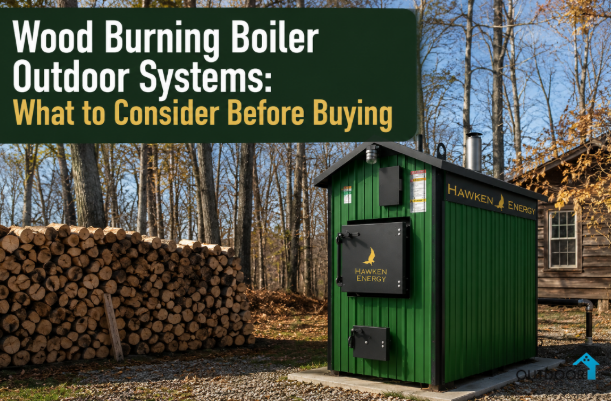
A wood burning boiler outdoor system can be a practical way to heat a home, workshop, barn, or other building, but choosing the right system requires more than simply comparing prices. Before buying, consider heating capacity, fuel availability, efficiency, installation requirements, maintenance, emissions, and local regulations.
What Is an Outdoor Wood Burning Boiler?
An outdoor wood burning boiler, also known as an outdoor wood boiler or hydronic heater, is a heating system installed outside the building it serves. Instead of sending hot air directly into the building, the boiler heats water or a water and antifreeze mixture. That heated liquid then travels through insulated underground pipes to deliver heat indoors.
According to the U.S. Environmental Protection Agency, hydronic heaters can be used for homes, barns, greenhouses, and garages. They can burn fuels such as cordwood, wood pellets, and other biomass materials, depending on the model.
This setup can be particularly useful for properties where wood is readily available and where there is enough outdoor space for the boiler and fuel storage.
1. Determine How Much Heating Capacity You Need
One of the first things to consider is the size of the system. A boiler that is too small may struggle to keep your buildings comfortable during colder weather. On the other hand, choosing a system that is significantly larger than necessary can result in inefficient operation and unnecessary fuel consumption.
Think about the total space you want to heat, the insulation of each building, your local climate, ceiling heights, and how much hot water you may need.
If you plan to heat multiple buildings, such as a house, garage, and workshop, make sure the boiler is designed to handle the combined demand.
It is better to determine your actual heating requirements before shopping rather than choosing a model based solely on its advertised heating area.
2. Consider Your Available Firewood
An outdoor wood boiler depends on a reliable supply of suitable fuel. Before purchasing one, think honestly about how much firewood you have access to and how much effort you are willing to put into preparing it.
Different systems may have specific recommendations regarding wood type, moisture content, and size. Burning properly seasoned wood can help the system operate more effectively and reduce unnecessary smoke.
Freshly cut or overly wet wood contains more moisture, meaning some of the energy from combustion is used to evaporate that moisture instead of producing useful heat. Wet fuel can also contribute to more smoke and deposits.
If you buy firewood instead of cutting your own, include the ongoing cost and availability of wood in your decision.
3. Look Beyond the Efficiency Rating
Efficiency is important, but it is worth looking closely at what an advertised efficiency number actually represents.
The EPA explains that overall efficiency is a better indicator of how much usable heat reaches the space being heated than combustion efficiency alone. Actual performance can also be affected by wood moisture, operation, installation, and outdoor piping.
This means two systems with similar advertised numbers may not deliver identical real world results.
When comparing models, look for documented overall efficiency and consider how the system performs under normal operating conditions. Properly insulated underground piping is also important because heat can be lost between the outdoor boiler and the building.
4. Check Emissions and Certification
Wood combustion naturally produces smoke and particulate matter, so emissions should be part of your buying decision.
The EPA established federal emissions standards for new wood-fired hydronic heaters, including outdoor wood boilers. EPA guidance also recommends checking whether a wood-burning appliance is certified and considering emissions when selecting equipment.
Lower emissions can be beneficial not only for surrounding air quality but also for the overall operation of the heating system.
Do not assume that every outdoor boiler has the same emissions performance. Ask for documentation and check the certification status of the specific model you are considering.
5. Think About Installation and Location
Where you install the boiler matters. You will need adequate outdoor space for the unit, fuel storage, access for loading wood, and maintenance.
The distance between the boiler and the building is another important consideration. Longer pipe runs can increase installation requirements and potential heat loss, making properly insulated underground piping especially important.
You should also consider prevailing winds, nearby buildings, property boundaries, and the location of the chimney or stack. Local rules may establish requirements for placement, stack height, or minimum distances from neighboring properties.
The EPA notes that some communities restrict or regulate hydronic heaters because of concerns about wood smoke and particulate pollution.
6. Understand Maintenance Requirements
Every wood burning boiler requires maintenance, and understanding those responsibilities before buying can prevent surprises later.
Routine tasks may include removing ash, cleaning heat transfer surfaces, inspecting components, checking water levels or treatment, and keeping the firebox and surrounding area in good condition.
The exact maintenance schedule depends on the boiler design and how frequently it is used.
It is also worth asking about replacement parts and service availability. A system that is easy to maintain can be much more convenient over its operating life.
7. Consider Thermal Storage
Some outdoor boiler systems work with thermal storage tanks. These tanks store heated water so the system can operate more effectively and provide heat when it is needed.
Thermal storage can be especially useful with systems designed to burn wood efficiently at higher output rather than continuously burning at a low rate.
Whether storage makes sense depends on the boiler design, heating requirements, installation, and how the system will be operated. It should therefore be considered as part of the complete heating system rather than as an optional feature chosen without context.
8. Calculate the Total Cost
The purchase price is only one part of the cost of an outdoor wood boiler.
Before making a decision, consider the boiler, installation, underground piping, chimney or stack requirements, pumps, controls, water treatment, thermal storage if needed, fuel storage, and ongoing firewood costs.
You should also think about labor. Preparing and handling firewood can require significant time, especially during the heating season.
Looking at the total cost over several years can give you a much clearer picture than comparing equipment prices alone.
Make an Informed Choice
Choosing a wood burning boiler outdoor system is a significant decision, particularly when the system will be responsible for heating one or several buildings. The right choice depends on your heating requirements, available wood supply, efficiency goals, installation conditions, maintenance expectations, emissions, and local regulations.
Take time to compare your options and understand how each system is designed to operate. If you are considering an outdoor wood boiler and want help determining what may work for your property, contact us or visit our website to learn more about available heating solutions and get the information you need to make a confident decision.